From Photogrammetry Data to an Optimized Model
The Pop-up Pinocchio: Being by the life and adventures of a wooden puppet who finally became areal boy (New York, 1932)
On occasion, 2D scans and reference photographs will not suffice to recreate an object in 3D. Such is the case for some pop-up pages, which could unfold in complex, kaleidoscopic shapes.
To solve that, we have incorporated photogrammetry in our workflow for a selection of this project’s collection.
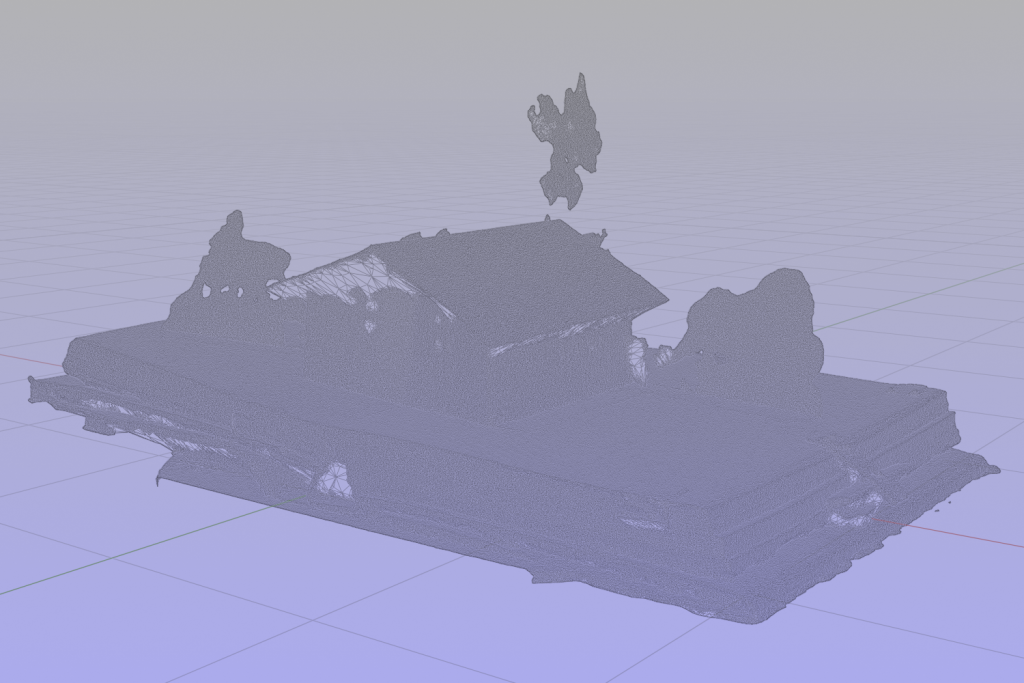
For The Pop-up Pinocchio: Being by the life and adventures of a wooden puppet who finally became areal boy (New York, 1932), between 420 and 690 individual data pictures were taken per page, resulting in mesh reconstructions of more than eleven million faces and more than 550MB file sizes, diffuse textures in 8K and almost 500MB file sizes.
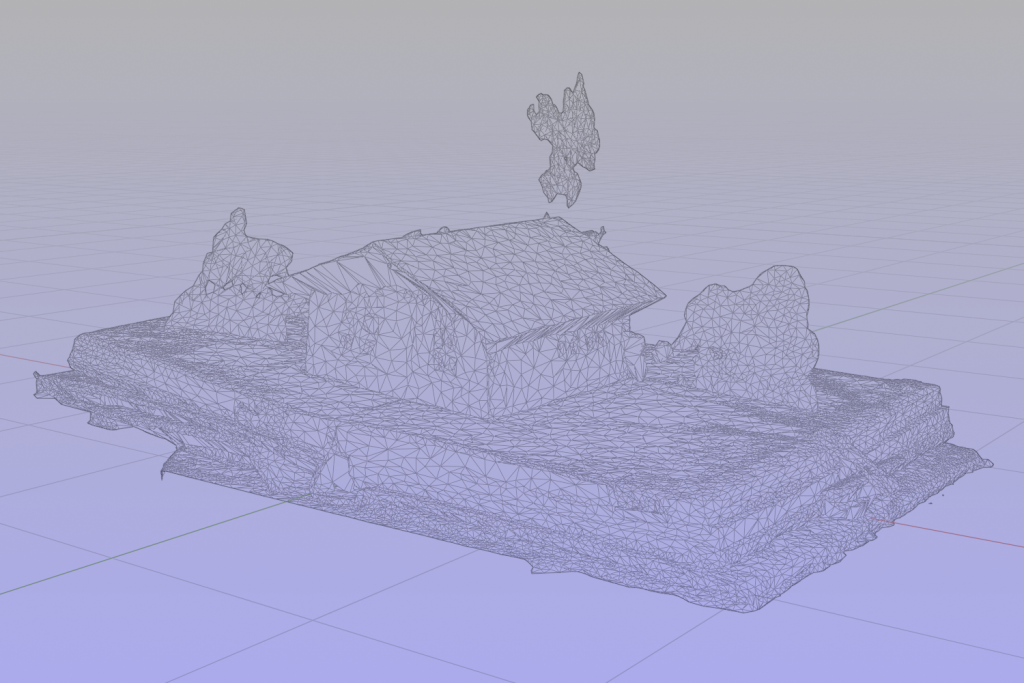
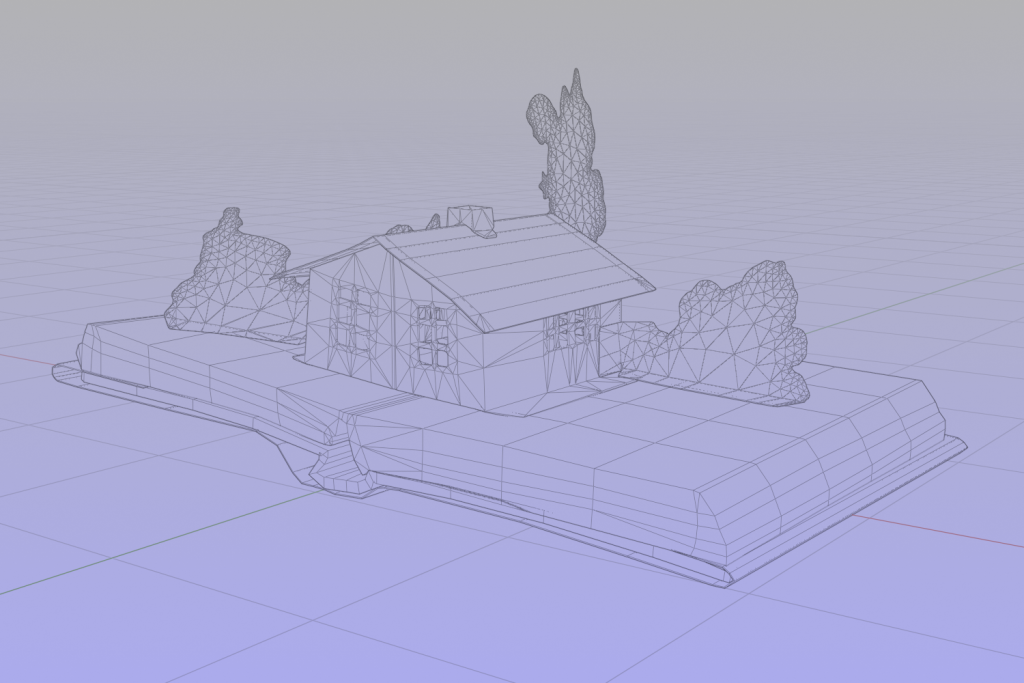
An initial reduction on complexity can be easily achieved applying a decimating modifier to the meshes in our preferred 3D authoring tool, compacting them to around 50,000 triangles. Atlasses can be downsized to a 2K resolution without a drastic change in rendering quality.
But due to the nature of our objects, constructed out of thin paper and full of detailed nooks and hidden drawings within insets and under flaps, some of the visual information ultimately cannot be reconstructed directly from the pictures‘ data. It is here when we resort to a manual retopology process.
Rebuilding the mesh on top of an existing photogrammetry model ensures that the location and size relation of all elements is kept. Gaps are filled, and missing corners are restored. The mesh flow is ensured for possible future folding animations.
The new diffuse maps are then baked from the high-topology model into the new, lower poly mesh. Missing parts or areas with artifacts get fixed extracting parts of the same hundreds of photographs taken for the photogrammetry process and stitching them like in our usual texturing workflows.
For Pinocchio, an extra set of pictures was necessary to reconstruct the interior of the house in page 2, as it is documented in Capturing Hard to Reach Areas.
See other entries in this blog, like Symmetry of Objects in Photogrammetry, to learn more about the photogrammetry capturing phase.
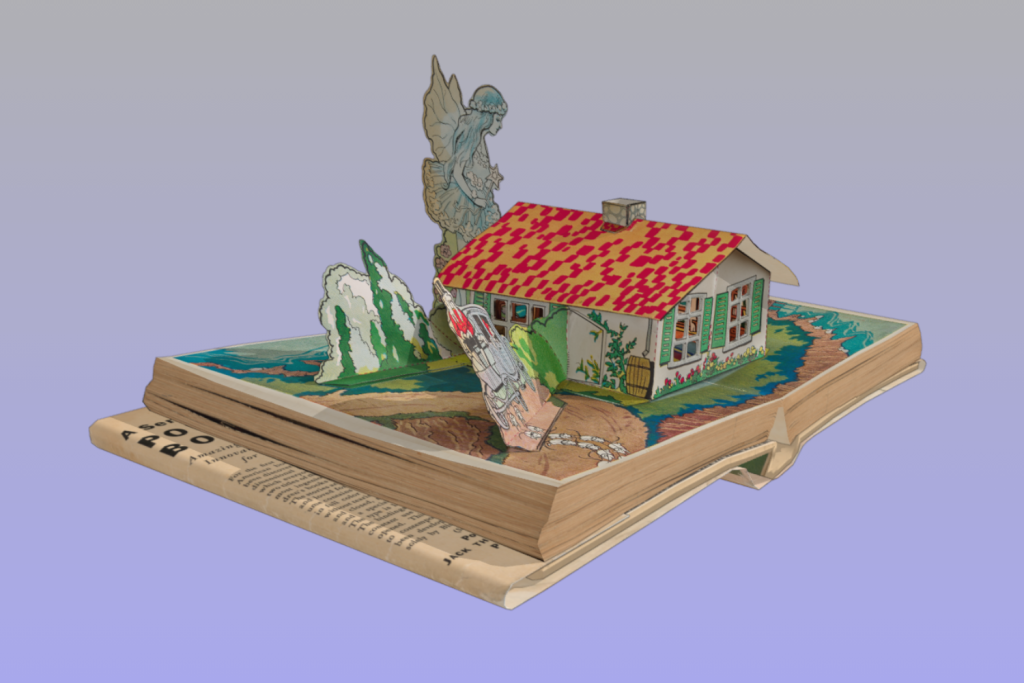
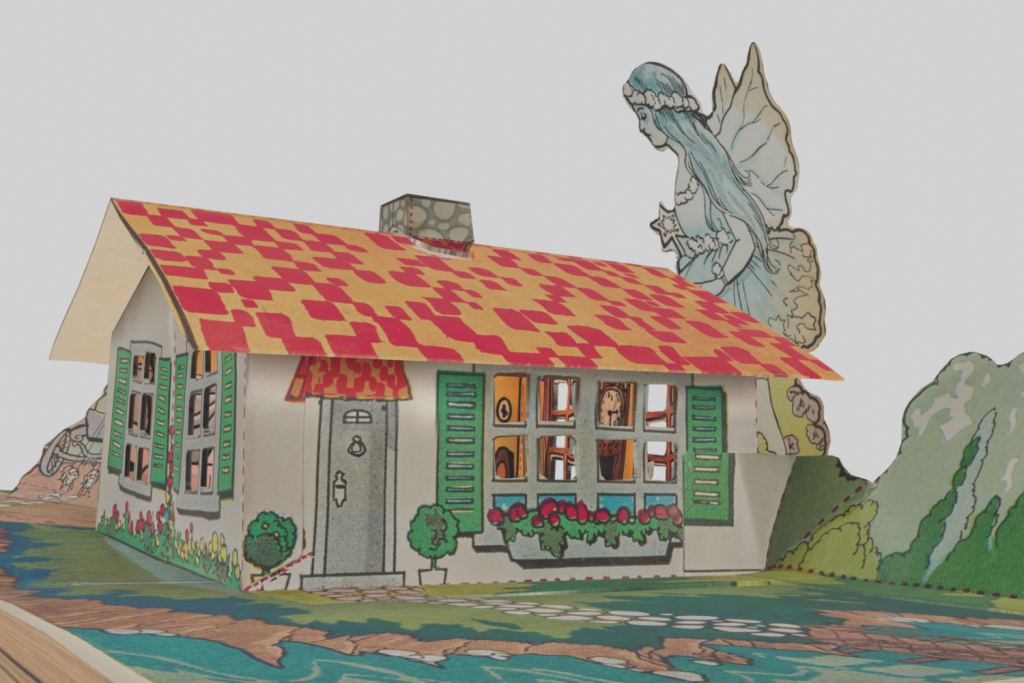
- Image: Close-up render of Page 2 3D model in The Pop-up Pinocchio: Being by the life and adventures of a wooden puppet who finally became areal boy (New York, 1932).
- Image: Millions of triangles on display. Photogrammetry model.
- Image: The same model, with a mesh decimate modifier. Silhouettes are kept at the same quality, and yet, this model is more manageable at the tens of thousands of polygons instead of millions.
- Image: Manual retopology, barely above ten thousand triangles on display. Polydensity has been distributed and the topology flow follows conventions for future animation implementation.
- Image: Another angle of the final model of page 2.
Author: Casilda de Zulueta